Algae
Algae live in water and come in many shapes and sizes. They are shades of green, golden brown, red, or brown. Like other plants, algae are made up of cells…
Algae live in water and come in many shapes and sizes. They are shades of green, golden brown, red, or brown. Like other plants, algae are made up of cells…
…and sizes. The most common shapes are round, oval, bell-shaped and slipper-shaped. Protozoa are clear. They become the color of the materials inside them, including the food they just ate….
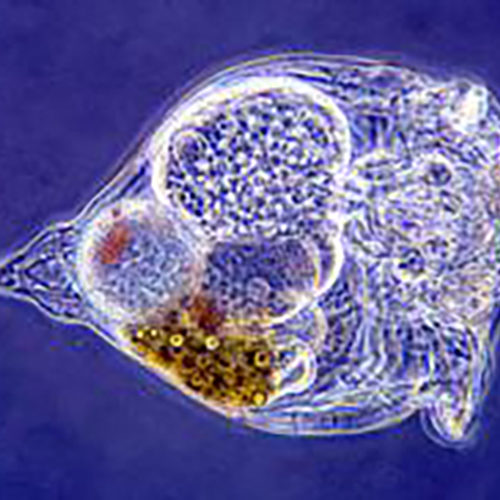
…their head end. The cilia beat in a wave, making currents to bring in food particles. Rotifers have real organs, including a brain, stomach and intestines. Rotifers are usually transparent,…
…inside the carapace is short with two sections, a head and a thorax. The head has four pairs of appendages (leg-like structures). The thorax has three more pairs of appendages….
…or clear unless you stain them with special dyes to see them better. Bacteria are made up of one cell. It can be round, long and thin, or spiral shaped….
…about the size of a dime when it is fully grown. The Lentil Clam Shrimp is smaller and more round. It is shaped like a lentil (a small, flat pea)….
…find in Sacramento’s vernal pools. The first flatworm, Mesostoma, is translucent and white. The second flatworm is translucent and green. It has green algae living in its body. The third…
…dark “mask” across its eyes and “suction cups” on its toes. Often called the Pacific Treefrog, it uses these toe pads to help climb plants, trees, even walls and windows!…
…with white feathers. It has a long neck and very long, black legs. Its bill is long, thick and yellow. An adult Great Egret is more than 3 feet tall….
For teachers/parents/partners who are more experienced with our IVP Program and/or Project AWE, who know just what they are looking for, here are quick-access links to our documents, forms, and…